

As part of The Film Stage‘s 2026 Holiday Gift Guide, Christopher Schobert, our resident book expert, has compiled his favorite filmmaking books of the year, along with a few selections from Jordan Raup and Dan Mecca, as noted. Happy reading, and be sure to check out Schobert’s recurring column here for more recommendations throughout the year.
Across the Movi-verse: Writing on Film, 2011-2021 by J. Hoberman (The Film Desk)

Last year’s TFS holiday gift guide featured a book by the legendary J. Hoberman, and it seems only fitting that this collection of the critic’s Village Voice output (from 1973 to 2012) is represented on the 2026 TFS list. The essays included here are blistering and brilliant (most notably his analysis of the late Chantal Akerman’s No Home Movie), but I especially enjoyed reading Hoberman’s thoughts on losing his gig; he refers to this as his “de-Voice.” Here is Hoberman on the process of “readjusting to the hell of freelance”: “Recast as a freelancer, it took me possibly half a day to realize that I’d be writing for online publication — something I hitherto haughtily refused — for significantly less income.”
But What I Really Want to Do is Direct by Peter Bogdanovich (Harper)

“The rumor that there existed somewhere on this planet Peter Bogdanovich’s diaries of his early years, famously unpublished, undoubtedly bursting with firsthand adventures with the greatest directors in Hollywood, from Allan Dwan to Jerry Lewis, was whispered among us as we lined up for every Bogdanovich appearance, retrospective, and book release,” writes Sam Wasson in his extraordinary introduction to this memoir based on the late Paper Moon director’s journals. Starting on June 3, 1965, and covering Bogdanovich’s years just prior to the release of The Last Picture Show, But What I Really Want to Do is Direct is stunningly intimate—a treasure trove for those fascinated with 1970s Hollywood and with Bogdanovich himself.
Public Access Afterworld by Jane Schoenbrun (Hogarth Books)

What would Jane Schoenbrun create with an unlimited budget? We already have the answer with their expansive, mind-bending, thoroughly riveting debut novel Public Access Afterworld. While grounded in the themes of identity and relationship with media that have made their three films passionately embraced, this novel creates an even more vivid world of intimate horrors and thrilling action that lies behind our screens. Cascading across varying characters, timelines, and even universes with staggering ambition, this is the perfect book to rip through during a few late-night reading sessions. – Jordan R.
Stranded on Earth: How Night Skies Became E.T. the Extra-Terrestrial by Max Evry (1984 Publishing)

Released in 2023, Max Evry’s A Masterpiece in Disarray: David Lynch’s Dune — An Oral History uncovered new details and also proved tremendously readable. The same is true of his follow-up, Stranded on Earth. Steven Spielberg’s aborted alien invasion film Night Skies has long been a source of fascination for film fans, but it has never been truly explored until Evry’s captivating book. He meticulously documents how the DNA of Spielberg’s never-made horror film influenced everything from E.T. to Gremlins, Rain Man, and 2026’s Disclosure Day. Stranded succeeds as both a what-might-have-been tale and truly unforgettable look at the strange era when Spielberg was “very aware of his powers but not necessarily in control of them.”
A Place Both Wonderful and Strange by Scott Meslow (Running Press)
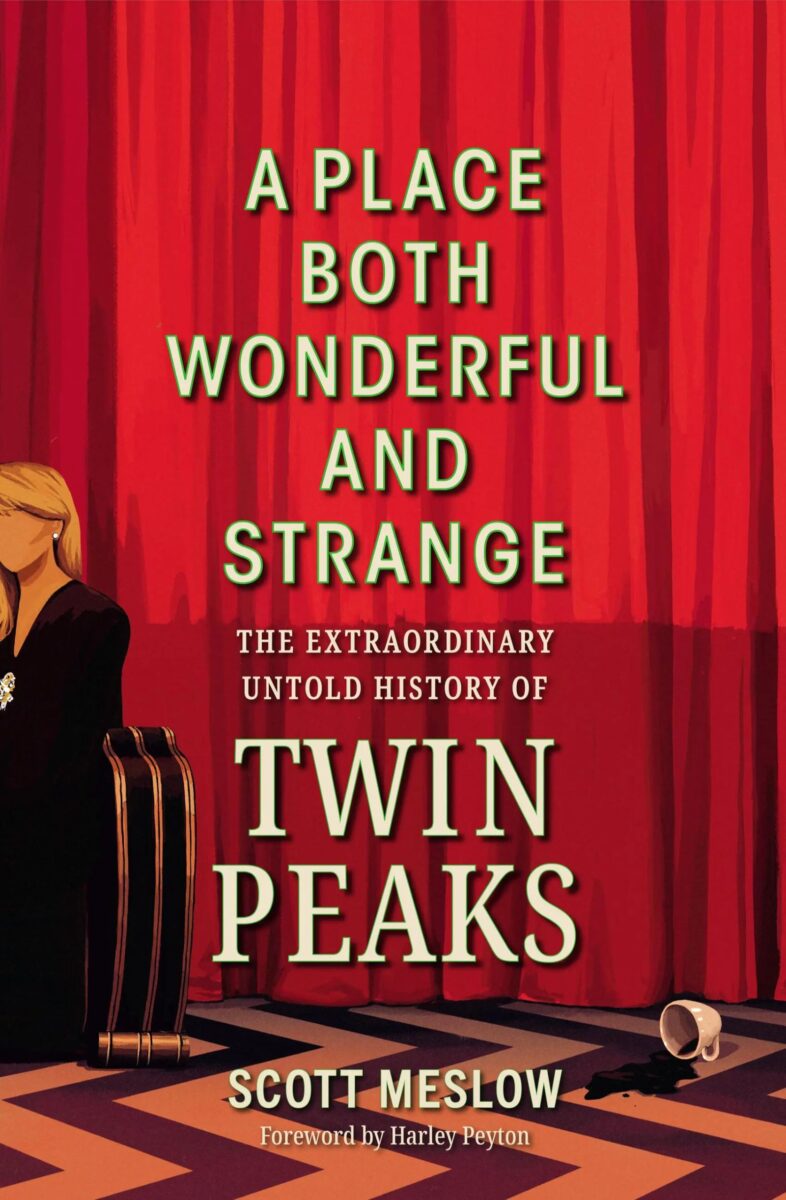
The death of David Lynch in early 2025 has inspired a deluge of new books, several related to his and Mark Frost’s masterpiece Twin Peaks. Scott Meslow’s A Place Both Wonderful and Strange: The Extraordinary Untold Story of Twin Peaks is among the finest yet. While we’ve encountered many of these stories before—the start of the project as Northwest Passage, its season-one success and subsequent downfall, followed by a big-screen turn in the form of Fire Walk with Me and subsequent resurrection as The Return—Meslow’s style makes it all feel fresh. He also spends a significant amount of time on The Return, making Wonderful and Strange an essential addition to the Peaks canon. Considering episode 18, he asks, “What does it all mean? Has Jowday triumphed or been defeated? Either way, what’s the cost? Is this an ending, a beginning, or a loop?” These are the questions that haunt Peak-ers to this day.
The Road to David Lynch’s Wild at Heart by Scott Ryan (Scott Ryan Productions)

Long the neglected child of David Lynch’s post-Blue Velvet output, Wild at Heart is in the midst of a renaissance. The Nicolas Cage- and Laura Dern-starrer was re-released in cinemas in November, with a long-awaited Criterion 4K shortly thereafter. On top of all this is the publishing of Lynch expert Scott Ryan’s The Road to David Lynch’s Wild at Heart. Ryan explores how Lynch interpreted Barry Gifford’s novel, dissects deleted scenes (including the infamous extended torture of Johnnie Farragut), and provides a startling oral history. The Road to Wild at Heart is an absolute must for anyone who adores Lynch’s complicated cult classic.
Fictional Selves by Kyle MacLachlan (Crown Publishing Group)

One more Lynch-related book isn’t directly about one of the late director’s creations, per se, but rather through the perspective of one of his key collaborators: Kyle MacLachlan. Charting the highs and lows of decades in front of the screen, MacLachlan entertainingly reveals stories about the rollercoaster of his Lynch collaborations, from the inauspicious start with Dune all the way to the career-capping Twin Peaks: The Return, with fascinating insights on how the latter captured his personal relationship with Laura Dern. In a rather surprising stretch, despite finding joy in Dune‘s cult status, the actor doesn’t seem onboard with the similar embrace of Showgirls, revealing a mostly negative experience of shooting and its reception. Those who listen to the audiobook will also be treated to the actor’s pitch-perfect impersonation of Lynch. – Jordan R.
Hannibal Lecter: A Life by Brian Raftery (Simon & Schuster)
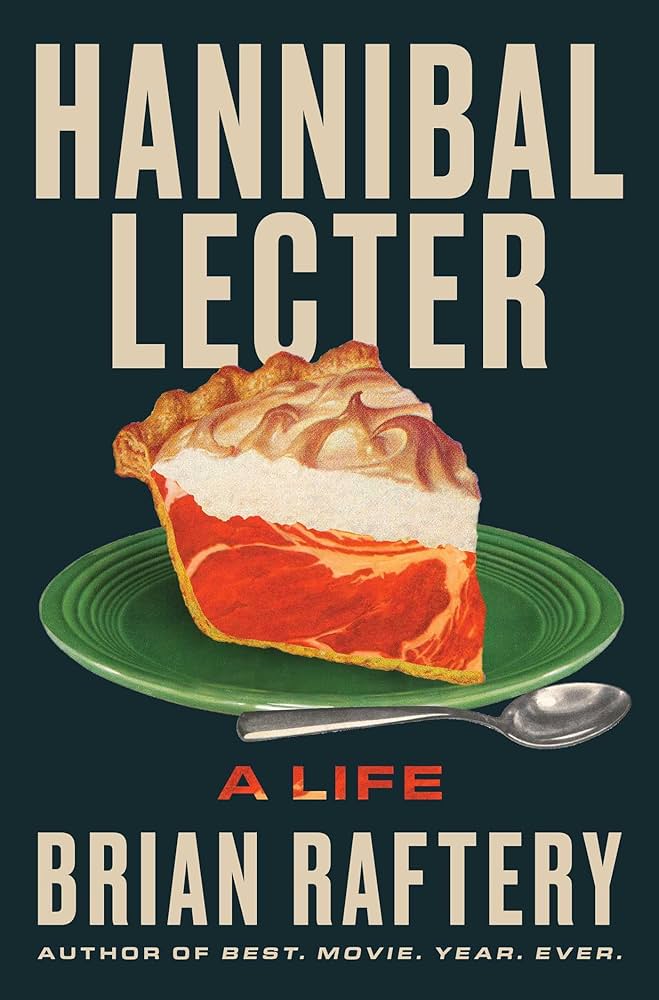
Brian Raftery, the author of Best. Movie. Year. Ever.: How 1999 Blew Up the Big Screen, can be counted on to write with humor and verve. In other words, he is well-suited for the job of tackling the life of Thomas Harris’ most unsettling and brilliant creation, Hannibal Lecter. Raftery outlines the life of the secretive Harris as well as his literary successes and the film / television adaptations that follow. Raftery also has the chutzpah to open Hannibal Lecter: A Life with Donald Trump’s campaign trail obsession with “the late, great Hannibal Lecter.” What was the reason for Trump’s fixation on a fictional “cannibal with a double-digit body count”? Raftery considers several logical reasons: “[B]oth are unapologetically id-driven, pursuing their desires without hesitation or guilt.” Even more compelling: “By the time Trump began commending Hannibal the Cannibal in interviews and speeches, both men had been infamous for decades — so much so that they’d managed to reinvent themselves.”
The Otherworld by Scout Tafoya (Primedia eLaunch LLC)

There are moviegoing eras of my life that are a bit blurry as I age, especially the early 2000s. Yet I vividly recall seeing and being mesmerized by Christophe Gans’ delightfully wild and woolly 2001 horror extravaganza, Brotherhood of the Wolf. As the great film critic Scout Tafoya writes in The Otherworld, his wonderfully deep analysis of Gans’ work, the filmmaker is “steeped in De Palma, Clive Barker, John Woo and video games.” He’s made just five films in three decades, “and each is stupendous, but each is also an eager B picture with A picture production value.” Indeed, Tafoya finds that Gans “will always be out of time and out of fashion; but he will always be an extraordinary stylist who belongs neither to France, Japan, America. Gans lives in his own mountain of images.” Like his books on John Ford and Tobe Hooper, Tafoya’s The Otherworld is a triumph that—like Gans’ Wolf and Silent Hill—throbs with lustful joy and excitement.
Welcome to the Family: The Explosive Story Behind Fast & Furious, the Blockbusters that Supercharged the World by Barry Hertz (Grand Central Publishing)

As his pithy X posts demonstrate, Globe and Mail critic Barry Hertz was the perfect choice to tackle the history of the Fast & Furious saga. Even as someone who has never cared much about Dominic Toretto and company, I was riveted and entertained by Welcome to the Family. Hertz catalogs how the series moved from ho-hum action to international phenomenon, all while dealing with combustible talents (e.g., Vin Diesel and Dwayne Johnson), increasingly ludicrous action sequences, and the sudden, shocking death of a lead actor (Paul Walker). Interestingly, the book ends on something of a cliffhanger, with the saga’s ending in doubt and all eyes on Vin. “Across ten films and a quarter century, Diesel made the world believe that a car could fly,” Hertz writes. “But how long could he keep it up there, suspended in air? Every road comes to an end, and every driver eventually hits the brakes—or dies trying.”
In The Mood? by Veronica Fitzpatrick (A24)

From A24 and edited by our dear friend Veronica Fitzpatrick, In The Mood? is a collection of erotic film recommendations from every corner of the cinematic universe. Beautiful visuals and short, incisive write-ups accompany each endorsement. It’s the perfect elevated coffee-table book for the sensual cinephile in your life. – Dan M.
Famesick by Lena Dunham (Random House)

For new autobiographies, one can’t imagine a more personal recollection of memories than those shared in Lena Dunham’s Famesick. Released earlier this year to much acclaim, the book charts, in detailed fashion, the mental and physical toll of putting everything you have into the creative process, pain and joy wittily conveyed in equal measure by means only Dunham can deliver. With the Natalie Portman-led Good Sex and more Girls on the horizon, this is an artist that has many more stories to tell. – Jordan R.
Is This It: The Never-Ending Rise and Fall of The Strokes (and Rock ’N’ Roll) by Steven Hyden (De Capo)

If Steven Hyden releases a book, there’s a good chance it’s the finest, most important music tome of the year. Sure enough, Is This It is unquestionably the best for 2026. Hyden explores how Julian Casablancas and company were set to take over the world and then… did not. The reasons are complex, of course, and the changed America post-9/11 was key: “The sound of Is This It is crucial. But that sound was swiftly overwhelmed by the symbolism of the worst American tragedy of the decade, which also ushered in an uncertain century in the most horrifying manner possible.” Hyden is ever-incisive, but also very funny and, in his analysis of The Strokes and their mighty debut, utterly masterful.

One of the strongest memoirs of 2026 might be Even the Good Girls Will Cry by former Hole bassist Melissa Auf der Maur (Da Capo). While promoting her memoir, Auf der Maur shared that backstage at an Olivia Rodrigo concert, the “Drop Dead” singer told Auf der Maur’s daughter, “Without your mother, none of this would have happened.” Indeed, the importance of Hole cannot be overstated, and Auf der Maur was as essential to the band’s impact as Courtney Love. As Even the Good Girls Will Cry documents, life in the band was complicated at the best of times, but Auf der Maur had an understanding of how to handle the ups and downs. “The drama and chaos of Courtney Love and Hole are infamous, but to me it all felt familiar,” Auf er Maur writes. “I found comfort in the chaos. My upbringing was the perfect training ground to be in a rock band and immersed in the world of Courtney. Despite how new I was to the band, I fit right in.”
Film Magazines

We also recommend supporting outlets offering some of the finest film analysis and consideration in both digital and print: Film Comment (including a newly launched, complete archive since 1962), Filmmaker Magazine, Sight and Sound, Little White Lies, and MUBI’s Notebook Magazine.
The post The Best Film-Related Books of 2026 first appeared on The Film Stage.
from The Film Stage https://ift.tt/nCOzUjX


0 Comments