
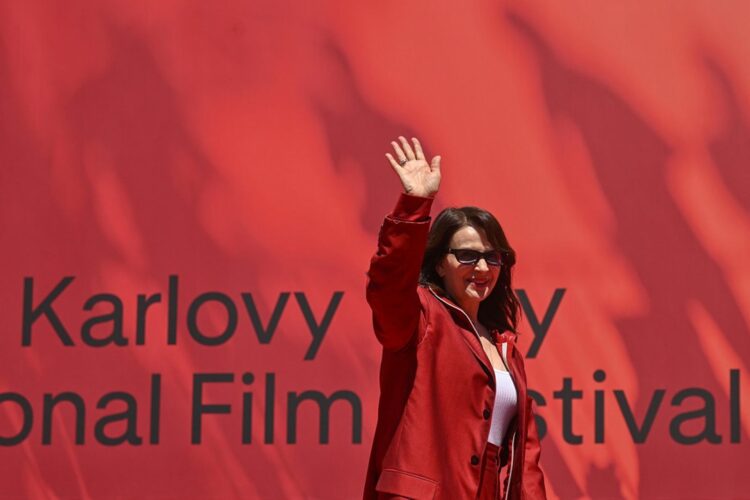
As moments for holding your attention go, July 2026 is not making it easy. The first summer World Cup of the TikTok age, much to the awful delight of FIFA, is surely in the running for most-eyeballed event in human history, and with a certain Homeric epic currently commandeering the cinemagoing imagination, you’d be forgiven for not clocking that one of the world’s great film festivals had just held its 60th edition.
It might not add up, but the Karlovy Vary Film Festival began in earnest in 1946, just a few weeks after the first such shindig in Cannes. This year, it celebrates the big 60, having been a biennial event up until the 1990s. In that time, the Velvet Revolution came and went; the Soviet Union then swelled and collapsed, and the country in which this grand old festival was situated changed its name and parameters roughly three and a bit times. Lionel Messi might still be banging them in at 39, but the diminutive Argentine has a long way to go to match that kind of longevity and perseverance.
To appropriately celebrate this milestone, the festival had been busy at work: adopting a bold-red color scheme on its merch and posters and drawing in an impressive roster of stars and familiar-looking critics. Film-wise, a one-off sidebar called 60/80 (a reference to the year’s edition and vintage) was introduced and offered an eclectic mix of favorites from over the years, including the lesser-seen Australian classic Captain Thunderbolt and Ken Loach’s Kes, two of the rare films from capitalist countries to screen at the festival during its time as a cultural arm of the USSR.
20 years from now, when it comes time to put together an 80/100, it’s difficult to say if any new title from this year’s crop will be up for consideration. If I had to guess, the most likely would be Miroslav Terzić’s 3 Weeks After—a memorable piece of work, if only in the same way that you might remember an ingrown toenail or a stomach ulcer. Indeed, 3 Weeks After is barely a film for the stout of heart, let alone the faint, but it certainly sticks with you—even if Justin Chang’s competition jury (which awarded the main prize to Aung Phyoe’s Fruit Gathering, a gorgeous-looking film from Myanmar that I thought was hampered by an erratic lead performance) apparently disagrees.
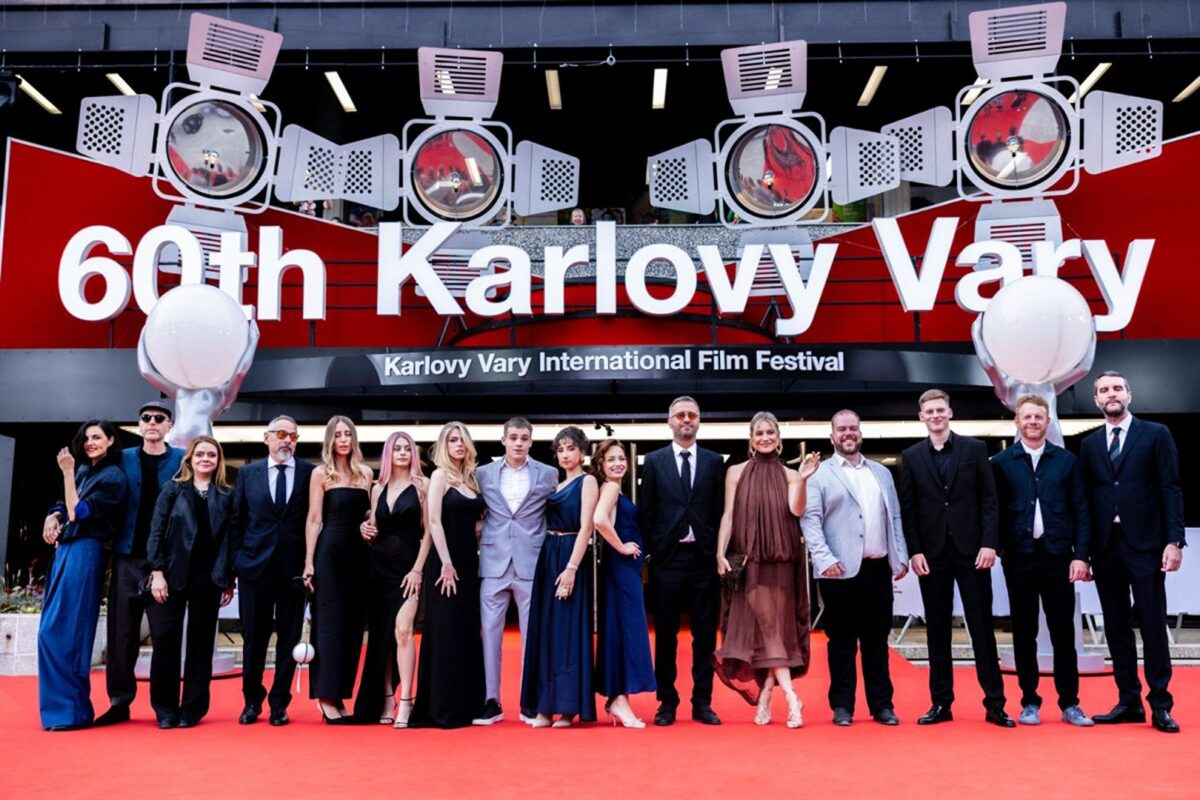
3 Weeks After premiere. Photo courtesy Film Servis Festival Karlovy Vary.
It follows a group of Serbian teenagers on a school trip that goes awry, forcing the students and their two hapless teachers to seek refuge in a remote hotel. Up to that point, Terzić’s film has been a powder keg of adolescent tension that only barely manages to stay dry in the film’s nerve-shredding opening act. Much of this takes place on the coach ride there, where an insular young man named Zoza (Jovan Ginić) appears to be using every ounce of his being not to draw the attention of a rowdy group down the back. Things only get more daunting for him when, behind his teachers’ back, one of the girls manages to sneak a stowaway on board: a skinhead named Milos (Andrija Markovic) who is also Zoza’s chief tormentor.
No other title at Karlovy this year inspired quite so much chatter, with critics mostly split on its nihilism and cruelty. Terzić’s film isn’t subtle by any means, but it makes its point without showing a single frame of violence. Naturally, one is reminded of the recent Netflix sensation Adolescence (another product of what I’m starting to think of as Millennial Panic) but there’s just as much aesthetic DNA of Gus Van Sant’s Elephant or the work of Gaspar Noé. The camera is forever stalking the characters or viewing them from afar, all the better to hammer home Tozkic’s helplessness in a world that no longer has the will or even language to save him. It’s a ruthlessly provocative film about bullying, Balkan history, and maybe fascism, and one I’d cautiously recommend.
Another is the Colombian film Five Years, Four Months—similar title, zero relation—which follows a bereaved mother’s attempts to locate the body of her disappeared son. This is a topic that’s inspired no shortage of stories in recent years (you’ll find elements of it in as far-flung places as Emilia Pérez, I’m Still Here, and the TV show Say Nothing) but few have made their point with as much brevity, grace, and creativity as directors Juan Miguel Gelacio and Esteban Hoyos García have managed here. This is a film about grieving, of course, but it’s just as much about community, solidarity, and ghosts: a film in which tough setbacks are usually followed by acts of kindness, and where the sun is generally shining, regardless of the solemn mood. It’s 83 minutes long, yet quickly locks you in and convincingly strings you along to one of the best denouements I’ve seen all year.
In the six years that I’ve come to the festival since 2018, I still find myself thinking about Radu Jude’s Crystal Globe winner from that year, We Will Not Go Down in History as Barbarians, a film that, in one fell swoop, changed Jude’s status from eccentric black sheep of the Romanian New Wave to perhaps the country’s most exciting director. Funnily enough, Jude appeared in the best film I saw at KVIFF this year: Arthur Harari’s The Unknown. While much excellent work has been written on this film already (not least by my esteemed colleague Savina Petkova) I will say that Harari’s precarious jettisoning of certain themes (the ones you might expect from a contemporary body-switch fable) has resulted in a low-key Twilight Zone tale that feels refreshingly light on its feet—one that, for better or worse, has less interest in subtext than immersive sensation. At its best, Harari’s latest offers inventive ideas and visual flourishes at a rate you won’t find, I imagine, in any other film this year.
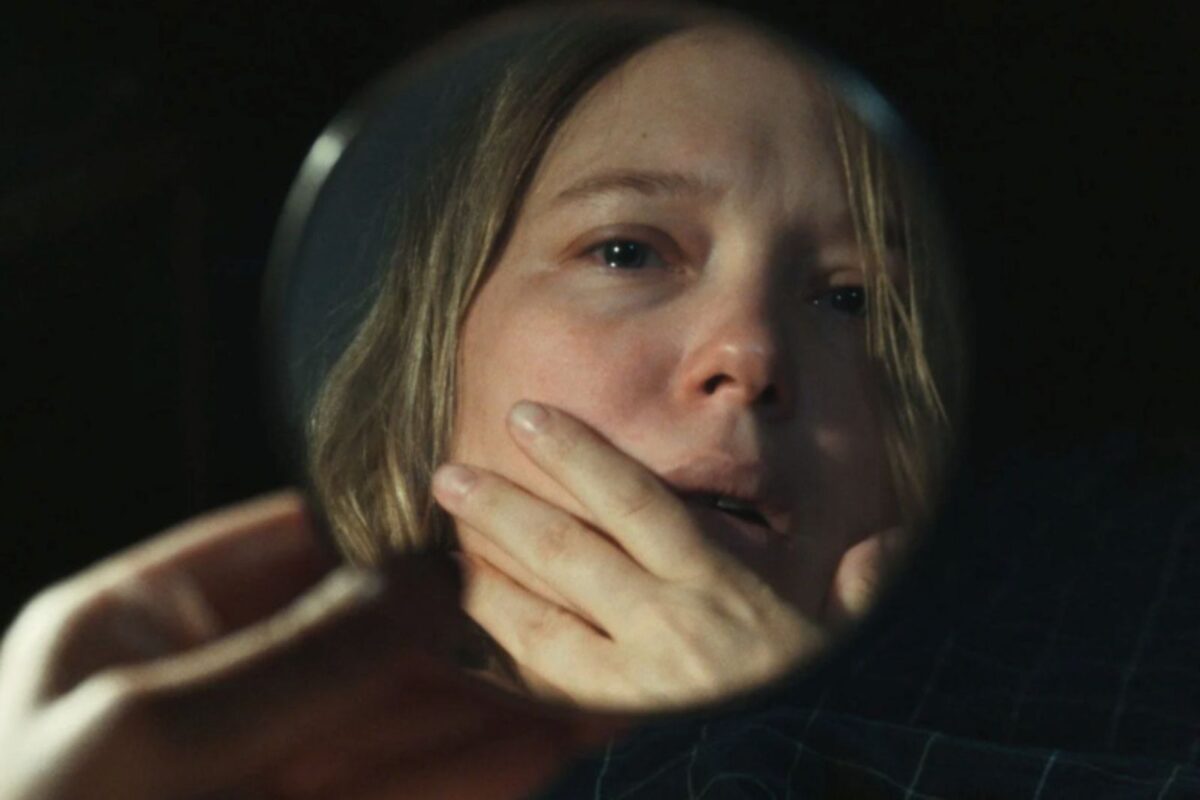
The Unknown
KVIFF did have one notable film that we didn’t manage to cover in Cannes this year: Emmanuel Marre’s A Man of His Time—a film about Vichy France that splits the difference between Armando Iannucci and The Zone of Interest. Swann Arlaud stars as the real-life Henri Marre, the director’s great-grandfather and a man whom the film positions as conceited and naive but not entirely despicable while showing him going about various tasks as a cog in the Ministry of Labour—up to and including signing the kinds of documents that landed hundreds of people on trains to the worst kinds of places.
Arlaud is excellent in the role, and Marre peppers his film with recurring anachronisms (ring lighting, ’80s synth music) that struck me as less redundant than the ones we’ve grown used to in recent period films. With a busy script and 155 minutes to sit through, A Man of His Time asks a lot of the viewer’s time and attention, but the fact that Marre has chosen to explore a shameful part of his own family history in such a candid, curious, unvarnished way was enough to keep me intrigued, even as the film lagged in later scenes. When Marre won Best Screenplay at Cannes, my suspicion was that the award was for having the “most” screenplay; now I think the jury was right.
Why Harari left empty-handed is less clear. At the time of writing, The Unknown looks to me like the film of the year.
The post A Serbian Odyssey, the Film of the Year, and More 2026 Karlovy Vary International Film Festival Highlights first appeared on The Film Stage.
from The Film Stage https://ift.tt/53bIn2u


0 Comments