

In 1973, Variety declared John Waters’ breakthrough film Pink Flamingos “one of the most vile, stupid and repulsive films ever made.” In 2022, that same film received a Blu-ray release from the arbiters of official film culture at the Criterion Collection. From underground provocateur to national treasure with a star on the Hollywood Walk of Fame, it’s hard to name another cultural figure whose status has evolved so dramatically as Waters, and without any fundamental compromise of his politics or worldview. Over 50 years ago, a strange boy from the suburbs of Baltimore, Maryland, set out to remake culture in his own image, and he succeeded.
But you don’t become a national treasure without putting in the hours, and in the more than 20 years since the release of his last feature film (2004’s A Dirty Shame), Waters has continued to nourish his audience with a relentless schedule of multimedia activity: books, speaking engagements, gallery exhibitions, acting gigs, talk show guest spots (you might recently have seen him sharing a couch with Stavros Halkias on Everybody’s Live with John Mulaney), and an interview schedule befitting a presidential candidate. Meanwhile, the 12 features that form the bedrock of his reputation remain perennially popular, not least thanks to Criterion, which has made a cottage industry out of his back catalog through releases of Multiple Maniacs (1970), Pink Flamingos (1972), Female Trouble (1974), and Polyester (1981).
Criterion has now added two more Waters films to its collection, both with the director’s full participation. The last of his underground period, Desperate Living (1977) is an outrageous “antifascist fairy tale” (per Criterion’s slightly pretentious but technically accurate copy) about a mentally ill housewife and her 400-pound housekeeper who flee from the Baltimore suburbs to “Mortville,” a hellish thrift-store Oz ruled by a sinister queen. Representing the other extreme of Waters’ sensibility, the PG-rated Hairspray (1988) was his most successful attempt at penetrating the American mainstream: a sunny but still spiky comedy about a struggle for integration at a Baltimore TV dance show, told through the lens of an overweight girl who becomes a local dance sensation. One of the few Waters films to enjoy a wholly welcoming critical reception upon release, Hairspray experienced a monumentally popular 2002 Broadway adaptation and subsequent 2007 feature-film remake that bolstered Waters’ latter-day status as an elder statesman, in addition to making him a very wealthy man.
Like so many others, I discovered Waters’ work at a formative age, and its impact on me cannot be overstated. So I was grateful to take a little of the master’s time for this interview, conducted over Zoom in June 2026.
The Film Stage: There’s a line in Cecil B. Demented that I quote all the time: “Technique is nothing more than failed style.”
John Waters: I love that line. There’s a perfect example for Desperate Living.
Well, in Desperate Living—and, to a greater extent, Hairspray—I think we actually do see an evolution of your technique compared to the early films. I’d love to hear about the process of becoming a more technically polished filmmaker as your career went on.
Every single film I made, I wanted to look like a Hollywood movie—I just didn’t know how to do it. So the mistakes are because I didn’t know any better. I didn’t purposely want them to look like that. However, some people love it and they call it “raw.” If they don’t love it, they call it “amateur,” and it’s the same thing.
Each time I learned a little more. The very first film I ever made, Hag in a Black Leather Jacket, I didn’t know there was editing. I just shot the shots in order, and when it was over, the film was done. In Mondo Trasho there was no dialogue—it was just long, long shots—and Pink Flamingos was endless pages of dialogue that we would shoot in long takes with no cutaways because it was single-system sound, so you couldn’t have A and B rolls and cut back and forth. Then we had double-system with Female Trouble. Then the first time they weaned the camera away from me, pretty much, was Desperate Living, which was good. And then Hairspray was the first kind of Hollywood movie where we had 35mm and everything, so each time it got a little better. I think my best film is Serial Mom, and I think it looks the best, and I had the most money to make it.
Correct me if I’m wrong, but Hairspray seems to be the first one that had a budget of multiple millions…
What was the budget? Maybe it was… two-point… one-point… I forget. Yes, it was way higher. Before that, Polyester was $300,000, and that was huge for us. So yes: it was the first movie that had a real budget—it was the first real movie that was made under kind of Hollywood traditions. I had producers, I had test screenings, I had casting agents—I mean, yes, it was made more conventionally. But certainly I was never told to not take the chances that the movie did take.
So it wasn’t a difficult adjustment?
No. It was great. I got a salary for the first time! I got food and didn’t have to go in the woods and kill something and cook it!
I would imagine that the early films were like a double-edged sword when you were looking for film financing. How did your life and career change after Hairspray?
Well, the early films, my father backed the first one and I paid him back with interest. Then I raised Limited Partnership—it was mostly pot dealers that gave me cash. Then in Polyester, New Line gave me some of the money and I raised the rest—we had a Limited Partnership—and Hairspray was the first time that New Line paid for it and I pitched the movie. And from then on, every single movie that I made, I pitched, got a development deal, and was made through the Hollywood system.
Your movies all have remarkable shelf lives. They haven’t really become dated. They always adapt to the current moment—as, I think, the new Criterion releases attest. What do you attribute that to?
Luck? I don’t know: there are always fascists that we have to defeat, there’s always good music, there’s always prejudice, fat girls always… well, that’s different. You’re not even allowed to say “fat” anymore, but they certainly have their own world where there’s lots of men that love big women. So that’s changed, I think in some ways, but mostly the problems that my movies address are always going to be there. My characters are not embarrassed about what society thinks is something negative that they have, and they exaggerate it and they win—and they mind their own business and they don’t judge others. I think every movie I ever made has that.
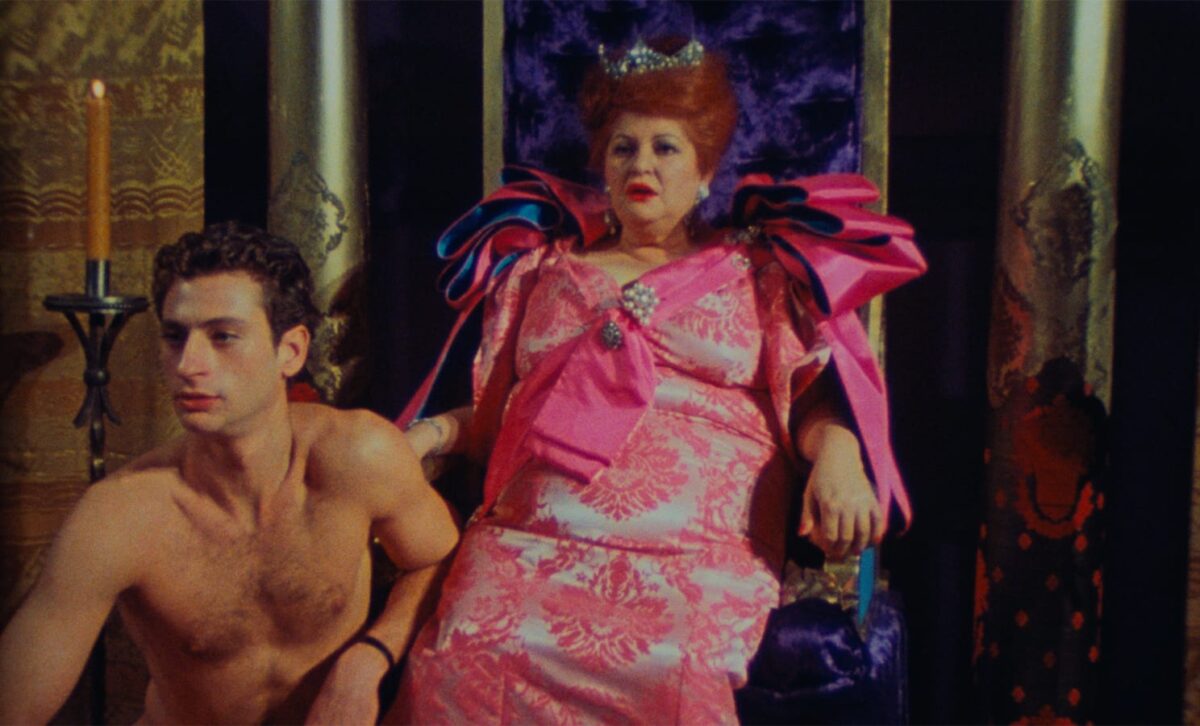
Desperate Living, courtesy of the Criterion Collection
In Desperate Living, the depiction of queer and transgender characters is obviously pretty outrageous, but also pretty forward-thinking in a lot of ways. Have you had a chance lately to see how that film plays with a modern audience?
I remember when it first came out, some lesbians were angry that a man made a movie about lesbians, period. The trans movement at the time was started at Hopkins University—that was one of the first places that did it—and Elizabeth Coffey was the first trans I worked with who was in a very memorable scene in Pink Flamingos, and she was in Female Trouble and Desperate Living too. But during the time that I made Desperate Living, I was hanging out very much in lesbian circles, and so I was in that world. And then when it opened there were some people [who commented], but then it did not do well. Later, when the trans movement happened, at first I think they were kind of outraged by it, but today I’ve seen it with young, hip trans audiences and they yell out the dialogue and stuff, so I think it’s finally okay. Penis envy is back in a whole different way.
When I’ve seen you perform live, I’ve always been struck by how multi-generational the audiences are. I’m in my 30s, and many of the people there are much younger than me.
They weren’t even born when I made the last movie, much less Desperate Living.
How do you cultivate that kind of audience?
By not taking myself too seriously. By making fun of the values that we all live by, not the ones that we rebelled from. And having a sense of humor about everything and never being a separatist. Never saying that we’re smarter than other people. That how you lose. That’s why we lost the election. Pick your battles.
Do you find there are subjects that represent fault lines between you and your audience, or factions of your audience?
There are some things I wouldn’t do jokes on, you’d never win… but very few. But I know the ones to avoid. No, you think about it, you hear my show and it’s pretty… well, some people you would imagine could get pissed off, they never do.
It’s funny, I feel like virtually every celebrity has a moment where they say something that causes an outrage cycle. But at least in my lifetime, I don’t think I’ve seen it ever happen to you.
No. I’ve said things that went viral that people laughed at, but never that cancelled me.
Nowadays you make so much of your living essentially being yourself—
No, I make my living from being a writer, not being myself. Every show I do is written, beginning to end, and I re-write a whole 70-minute show once a year.
Well, I was going to ask if it’s difficult to balance your public and private selves, since “John Waters” is a brand.
No, it’s not. The brand thing, I’ve got a whole new line of clothes—my brand is really big now. I just had my first poem published in The Atlantic. I’ve got so many projects. I did 59 shows on the road last year. So my brand is thriving, but my private life I do keep separately. You don’t know anything about my private life, and I’ve been doing this for 50 years. I don’t wanna be involved with someone who wants to be in the press.
Unrelated question: you’ve talked a lot about your influences over the years, whether it’s Andy Warhol, Russ Meyer, William Castle…
I wrote a whole book about it. Role Models was every person that really gave me the freedom to be myself.
I haven’t heard you talk about any comedy influences, and since you work in the realm of comedy, I’m curious if you have any personal touchstones or influences in that world?
Well, certainly Lenny Bruce. Certainly Don Knotts! I would say Lenny Bruce, Arnold Stang, Pee-wee Herman were comedians that were certainly influences on me. I think Lenny Bruce was the first. Think about it: he went to jail for saying the word “cocksucker” on stage in San Francisco. Today in San Francisco, the San Francisco police are taught that cocksucking is fine.
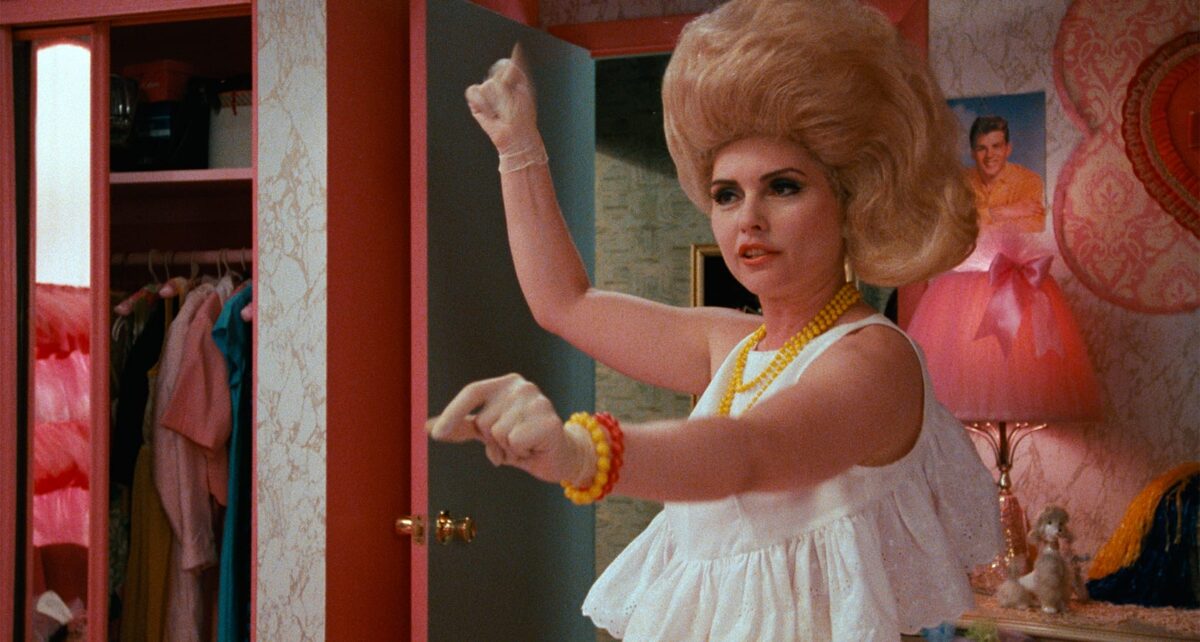
Hairspray, courtesy of the Criterion Collection
Getting back to Hairspray, I think it’s wonderful that thanks to you, I know what The Buddy Dean Show [a real Baltimore-based TV dance show, heavily influenced by Dick Clark’s American Bandstand, that inspired the film] was. The whole world knows what The Buddy Dean Show was. How was the film received initially by people who were on that show?
Well, they helped train the choreographer to do it. They were amazed by it. They walked on [the set] and said it was like being in the Twilight Zone, it was so much like it. I still see those people. I went to a dinner with five of them a month ago, so I’m still in touch with them. They’re getting pretty elderly now, but they still do “The Roach” without irony, and it’s pretty great. They were really happy about Hairspray, I’m so glad. Buddy Dean went and saw it on Broadway and the thing he loved was that Dick Clark had paid to see it! That was hilarious because we never had Dick Clark in Baltimore because of Buddy Dean.
He didn’t get a free ticket, then?
No, he had to pay, and Buddy Dean loved that.
Apologies if you’ve been asked this a lot already, but could you talk a little bit about your relationship with Criterion?
Well, my relationship with Criterion is: I feel greatly honored that this is, what, the fifth or sixth movie they’ve done? Susan Arosteguy produces them all, Lee Kline is the one that restores them all, and they’re an amazing team to work with. We come up with good ideas for extras. It’s a prestige act, but at the same time, they don’t try to take away from anything. The idea that Janus Films now distributes some of my movies, including Multiple Maniacs in theaters, is so hysterical to me because I grew up watching Janus Films release Truffaut and Godard and stuff. To imagine that Janus Films would ever distribute Multiple Maniacs is really because of Criterion—so I salute them. They’re an absolutely wonderful company.
Are you closely involved in the restoration process?
Yes, I go up and see it and Lee shows me everything, but Lee so much knows what I want and he doesn’t ever guess me wrong. But yes: I look over everything and they always send it to the original cinematographer to look at too.
Just another random question: is Faster, Pussycat! Kill! Kill! still your favorite movie?
Well, I always said The Wizard of Oz was my favorite movie, so I would say that would be a tie, yes. Nothing has taken its place.
Have you been reading any good books lately?
Yes, I read the great book about what happened to the Marquis de Sade’s manuscript of The 120 Days of Sodom [The Curse of the Marquis de Sade, by Joel Warner], and I just finished another good book about the history of Lady Chatterley’s Lover and the controversy that caused forever [Lady C: The Long, Sensational Life of Lady Chatterley’s Lover, by Guy Cuthbertson]. Those are the last two books I’ve read. I’m reading the book about Peter Hujar right now [The Wonderful World That Almost Was: A Life of Peter Hujar and Paul Thek, by Andrew Durbin]. I’ve always got a book… what have I got line up to read next…? [Sound of ruffling paper] Here’s my reading list for summer: Fantasies of the Body by David Plante; Dangerous, Dirty, Violent and Young, that’s [about] the fugitive family of the Weather Underground; and The Oracle’s Daughter: The Rise and Fall of an American Cult—that’s my next three books.
I also always value your opinions on movies, so I’m curious if you’ve seen anything lately that you’ve liked?
I will, but I have my ten-best list every year in New York Magazine, so I couldn’t give that away…
Ah, well, fair enough.
I will tell you still: Sirāt. If you haven’t seen Sirāt, I’ve never seen a movie that demands you see it in a movie theater so you can see the audience reactions, where people practically have nervous breakdowns because of the plot.
Well, I won’t keep you any longer, but I just want to tell you that I read your book Crackpot when I was in the ninth grade and it really changed my life, so thank you for that.
Well, thank you; I’m glad it did. That’s why I wrote in Role Models about the things I read when I was young. You need somebody that your parents wouldn’t like to give you the freedom to be yourself, and thank you if I was that for you in any way.
Desperate Living and Hairspray are now on the Criterion Collection.
The post “There Are Always Fascists to Defeat”: John Waters on the Enduring Legacy of His Films and Never Getting Cancelled first appeared on The Film Stage.
from The Film Stage https://ift.tt/F4nikoT


0 Comments