
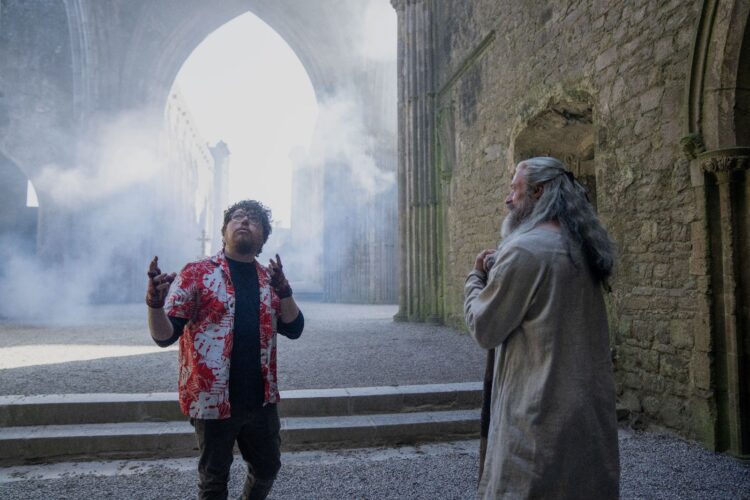
When you think of Robin Hood, what do you think of? Errol Flynn? Kevin Costner? Stealing from the rich and giving to the poor? Bryan Adams’ smash hit “(Everything I Do) I Do It for You”? With The Death of Robin Hood, Michael Sarnoski is taking a new angle on the legendary outlaw. Riffing from the 17th-century ballad “Robin Hood’s Death,” the writer-director builds a fresh narrative that confronts the nature of storytelling head-on, asking why we tell the tales we tell and what good or ill can come from them. The result is a violent, sorrowful piece that features one of the best performances Hugh Jackman has ever given.
Ahead of Friday’s release, we spoke with Saranoski about the inception of the idea, why they filmed in Northern Ireland, which other Robin Hood films are his favorite, and much, much more.
The Film Stage: Other than the ballad “Robin Hood’s Death,” which was told a couple of times in different places many centuries ago, were there any other ballads that jumped out at you as you were conceiving of this idea?
Michael Sarnoski: Early on, I knew “Robin Hood’s Death” was the one I really wanted to mine and focus on. What appealed to me about it, even as a child, was how different it was from the others. You have these fun, violent stories, and then this very quiet, simple, human story. The contrast of that was what fascinated me about the character—this is the same person who is chopping off people’s heads and doing all this crazy stuff, and then he’s also this guy. There are certainly references to the other ballads in the film and explores whether or not those stories are true, and what they meant to Robin. [“Robin Hood’s Death”] was always kind of the soul of it.
Did you go in having a favorite Robin Hood movie or TV show?
I think it’s like how people have their favorite James Bond based on which one they grew up with. For me, that was Disney’s Robin Hood. That was everything to me as a kid; that was my favorite Disney movie. And then Robin Hood: Prince of Thieves was the other one. I had all the toys, the treehouse set, and all the little action figures.
The Costner version is interesting because they’re doing a little bit of what you’re doing—hinting at a more realistic iteration.
Yeah, they’re grounding it and making it feel real in ‘90s terms, even though it’s a rollicking, silly thing at times.
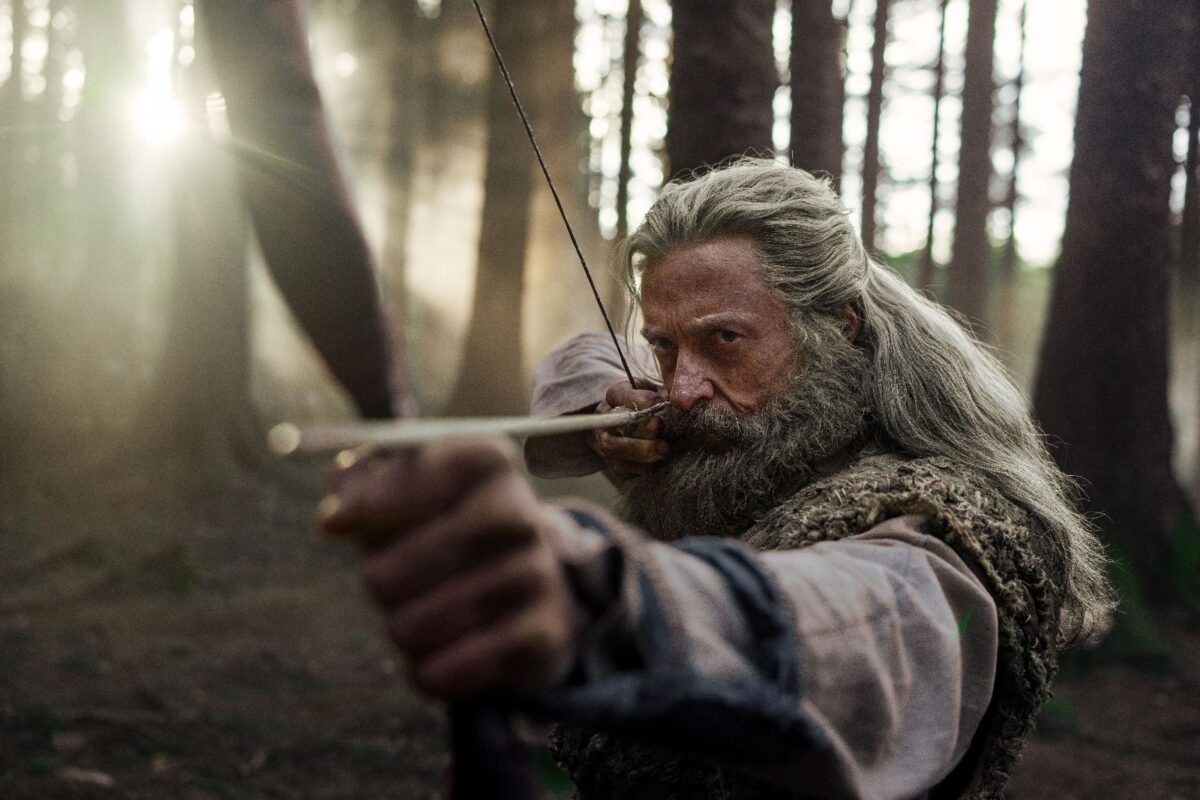
One thing I loved about where you filmed the movie is that Robin Hood is such an English story, specifically. So I loved that you shot this movie in Ireland! There’s such a beautiful underdog element to that. How did you come to film there?
We scouted a lot of different places and we really landed on Northern Ireland because within an hour of Belfast, you have such a crazy range of environments. We shot this movie in 30 days, so we didn’t have a lot of time to be doing giant company moves. We looked at the Lake District in England and the Highlands in Scotland, and those are gorgeous places, but if you want to go from that to a beautiful cliffside-coastal thing, it’s going to be a flight to get there. We couldn’t do that in the kind of scrappy indie way we were trying to do it. Also, in Northern Ireland, the crews were just amazing. It’s all these crews that kind of came up on Game of Thrones, and this is kind of their bread and butter. They just live and breathe this stuff.
Tell me about Scotichronicon? What are you pulling from that source?
It’s basically an old history book, kind of like the Herodotus for Scotland. It’s pseudo-mythic history in the way that history was back then, where it wasn’t exactly concerned with being 100 percent accurate. It was maybe the first written mention of Robin Hood in any sort of historical text. It briefly describes him as this murderous cutthroat who the common folk are so fond of telling stories about. It showed that even back then, it wasn’t fully agreed upon who this guy was and what he meant to people and that he could be repurposed in different ways. It was a useful thing to jump off of with the brutality of the old ballads. What if the brutality was real but some of the nice things were the whitewashing and not real? The ballads came out 300 years after the theoretical “Robin Hood” existed. That’s a lot of time to adjust and become different from what it really was. It’s almost like Robin Hood had become a cultural stand-in for a classic outlaw before the stories had even been written. It’s similar with [King Arthur]. The first mentions of Arthur refer to him as a “good warrior.”
What I love most about your film is your interrogation of storytelling. There’s such constant telling of stories, questioning what is true, what’s not true, and does it matter. You must have come to that conceit early on.
That was ingrained in that character for me. In thinking about the contrast between the quiet death of Robin Hood and the adventures, thinking about what these things meant and what their purposes were was important to me. It came from a character sense of thinking about this Robin Hood who had outlived his time, seeing this legend when he wasn’t even dead yet.
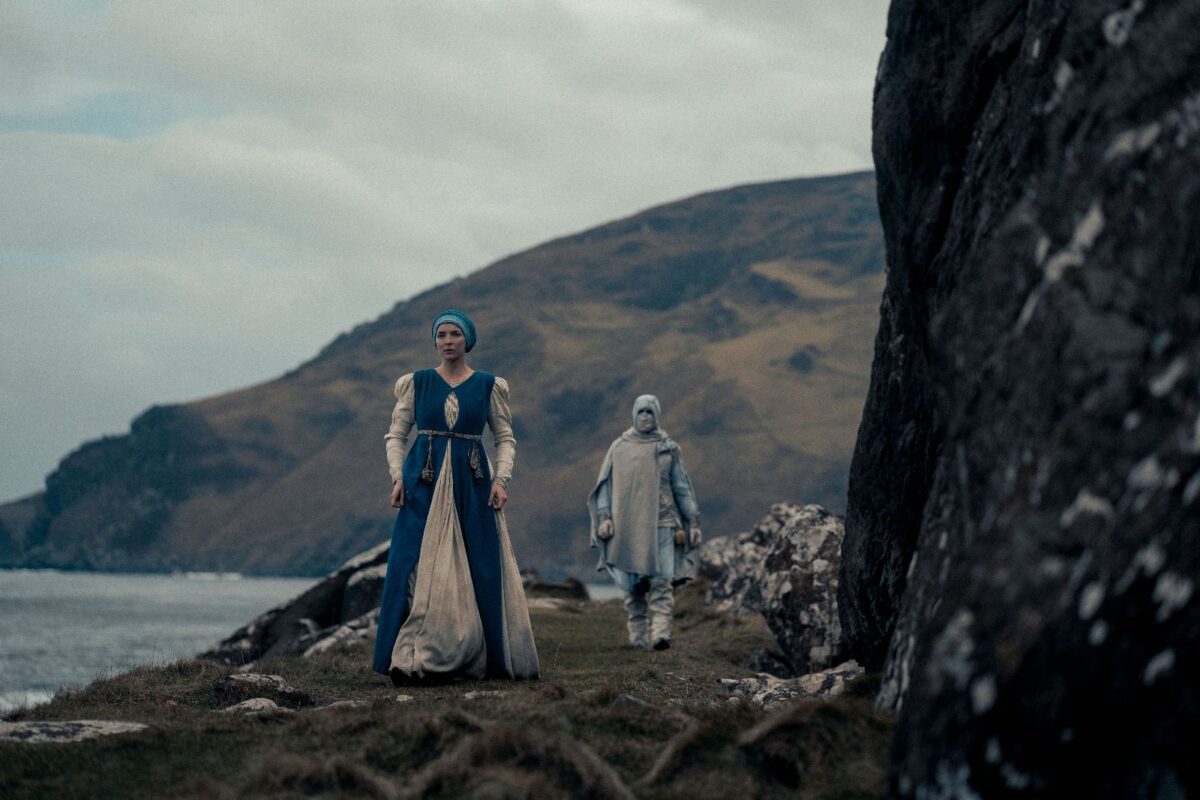
Robin is using stories as weapons and as tools of violence and control, and the Prioress, in her own way, is using stories to manipulate people as well, but to try and heal them and help them. She’s trying to teach him that just because you use stories to do terrible things, and just because they might not be true, doesn’t mean they can’t help people.
You have Hugh Jackman playing the character. In all three of your features, you take these great movie stars and subvert the thing that they do the most. Is that a subconscious desire to mine something new out of these well-known people?
I like to write characters without thinking about casting at all. I’ve never written a role for an actor. I like to really just make sure that the characters feel full on the page and like they’re alive and complicated. Then I like to find an actor that both understands the script and that character and is really into it, but then also feels like they’re going to bring something beyond that to it that will surprise me as well. I think that’s what attracts actors to some of these roles—they want to challenge themselves. And I want to challenge myself. [When I’m writing a movie], I want my initial instinct to be, Oh, this could be a terrible idea.”
With Pig, it’s a movie about a guy with his truffle pig. With A Quiet Place: Day One, it’s a survival horror movie where the person doesn’t want to survive. As a writer, I want to be like, “Can I make that work?” because that’s where you get to be playing right at the fringe of what you yourself understand.
To the point of the 30-day shoot, was there a hardest sequence?
The muddy fight scenes were brutal. Hugh has said that was his hardest day on set in his career. We already wanted it to be brutal and punishing, but then we get there on the day and it just started pouring rain. We had built Little John’s farm in this big open field in Northern Ireland and the whole place was flooded and was a foot deep of mud. It was freezing cold, and then we had to shoot three distinct fight scenes there. We shot all of that in three days. We could not have done it without Hugh, who is just such a pro at that stuff and was really willing to put himself through it and roll around in the mud. To achieve something that feels sloppy and not “Hollywood-ized,” action-wise, you actually really have to dive into the details to make sure that it feels visceral and present. The harder it was, the more exciting it was too.
The Death of Robin Hood opens in theaters on Friday, June 19.
The post Michael Sarnoski on His Favorite Robin Hood Films and the Character’s Violent Mythology first appeared on The Film Stage.
from The Film Stage https://ift.tt/7jVSoU8


0 Comments