
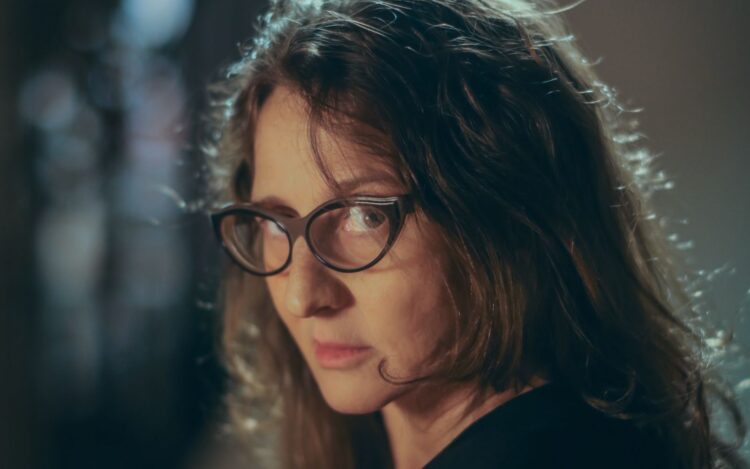
Lucrecia Martel is one of our great chroniclers of existing on stolen land. Through wit, clarity, and without any hollow platitudes, her work cuts through white settler lies. She often says that despite making films about the destruction of indigenous land, she’s not making indigenous films. This distinction is important because, to her, for these to be considered indigenous films, they’d have to be made by and steered by the people in those communities. Instead, for over three decades and across many shorts and four narrative features, Martel excoriates the privilege of the white, bourgeois class in Argentina and lays their societal rot bare. What’s fascinating about Martel is that she never succumbs to self-flagellation or limp gestures at allyship. In turning the camera on her own people, herself included, she gives no quarter to the idea that you can be let off the hook. Even if your intentions are most pure, the original sin of colonialism hangs over you forever.
Turning her attention to the real world, Martel moves into her first documentary feature. Through archival materials, courtroom footage, and stunning drone photography of the Argentinian countryside, Our Land (Nuestra Tierra) is a searing look at the murder of Chuschagasta leader, Javier Chocobar. A key figure in his people’s right to their own land, Chocobar documented his own murder by three white settlers in 2009. Confronting the men with a camera as they infringed on his land, he was shot to death in a horrifying moment of settler violence. Now, almost two decades later, Martel seeks to expose the blatant corruption and sickening double standards of the murder trial. While the Chuschagasta people are tied up in bureaucratic nonsense, even surrounding the idea that they even exist at all, the murderers walk free. Martel laces the proceedings with her patented dark humor, this time coming from the settlers’ inability to see the privilege and hypocrisy they thrive under. An idea as simple as letting them speak, she allows them to hang themselves with miles of rope. Her continued fascination with cinematic language as a tool to examine language itself stands out as well, with an incredible moment of reality breaking when a bird flies into her drone. It’s as if the land itself is saying, “Get out.”
Ahead of Our Land’s release beginning Friday, Lucrecia Martel and I sat down to discuss the film, starting anew with every film, indigenous joy, the new restoration of The Headless Woman, and so much more.
Thanks to Cordelia Montes for interpreting.
The Film Stage: While Our Land circles themes present throughout your body of work, it’s your first documentary. Does the approach change when stepping into that world?
Lucrecia Martel: I feel like every time that I have made a film, I start from scratch, and I don’t know if it’s because there’s so much time that lapses between one film and another, but it always feels like it’s my first time. Without a doubt, I think with a film of this topic and with this material, it’s made me really rethink cinema and history itself because history is a narrative process in itself. So I think it’s inevitable to make changes to my approach.
On the surface, this could be seen as an indigenous film, but I know you’ve pushed against that. Can you tell me about that, and instead, how you were able to meld their story with the white settlers making complete fools of themselves?
I think it helped, and I’m actually glad that I didn’t have to do too much to show how arbitrary and how filled with lies this process of land appropriation is. I don’t think of this as an indigenous film because for it to be an indigenous film, it means that the whole process was led and constructed by an indigenous community. I think it really focuses on a very profound problem in Argentinian history, and it’s our inability to see ourselves as an indigenous country, which we are in a high percentage.
Were the Chuschagasta people wary of you coming there to tell their story?
Certainly. It was a process that took a lot of back-and-forth conversations. There was conflict, there were encounters. I think, at some point, the community thought that the film would be a way to accelerate the trial. They only had references like the news or different types of brief documentary experiences, but they never thought someone would tell their story accurately. I don’t think they had ever experienced how much deeper a documentary could go. That was something that we talked a lot about, but I don’t think it was finally understood until we watched the final product together.
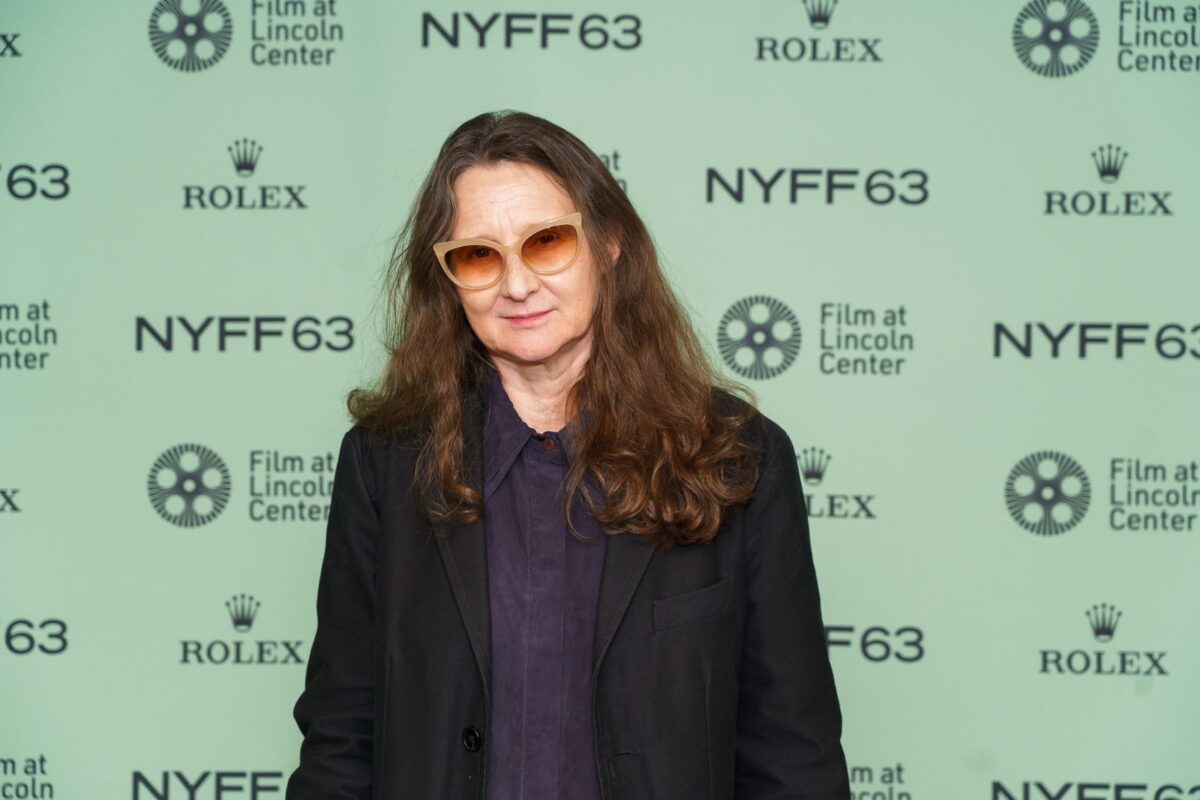
Photo by Colleen Sturtevant, courtesy of Film at Lincoln Center
Something you avoid is making this an entirely painful experience. We get to see the Chuschagasta people thriving and happy in archival photos and living their lives today. You don’t sit in their anguish.
I was very concerned that this would be perceived as something that is happening in the past. In Argentina, every time we think about indigenous stories, it’s always related to the past. I wanted it to be very current and even a bit futuristic. In Argentina, the way we see the indigenous world is when someone dares to venture into a region. They may encounter a family, but we don’t really ask a lot of questions about who this family is, why they’re there. You assume that they are employed by one of the owners of the land.
Every time we do see them—for example, in the news—it’s very sad, very anxious. They have had a leader that’s been assassinated. Always in these exhausted states. We never get the opportunity to see them reflect on their lives. We never get to see them not in despair. I also thought that it was important for us to see how these people saw themselves, took pictures of themselves, and had the will to record their lives beyond. In the desire for historical transcendence through photography, I think that’s where we can relate the most to these people.
It’s interesting, because we even get Javier’s murder from his own perspective. To that point, you do so much work to strip the film of your own, including a lack of narration. Do you think objectivity is at all possible, though?
I think objectivity is not possible, nor do I find it useful. I think the narrative or the process of narrating something can be used with the purpose of propaganda to try to convince, but for me, the more interesting part of cinema and of the narrative in general is being able to alter our ability of perception.
Your focus on image often underlines language and the push-pull of what we say versus how we say it. How much of that ongoing fascination went into the overall construction of the film?
A lot. I’m fascinated by language and how things are said. I think it’s impossible to lie. I think in this film, as I was doing this, what I got out of it is the impossibility of really being able to lie to someone and how someone will train themselves to see how they can use language to mask and manipulate that lie. The ability to deceive with language is actually quite difficult, and we really need to train ourselves to be able to see it.
One of the ways you shake us out of falling into propaganda is your use of drones. They capture this gorgeous landscape, and yet you can hear the motor whirring through the serenity. There’s that great moment where the bird knocks the drone out of the sky. I love those little touches of reality, never allowing us to settle into landscapes that aren’t ours. What attracted you to this newer technology?
I think technology always has a period where it appears with a specific purpose, and then we’re able to change it and apply it to a different purpose. This was a technology that was made for war, not to shoot beautiful scenery. The drone was something that came out of a desire to control and conduct violence in enemy territories. I think it’s what’s charming about human beings: that we can take something that was created for nefarious purposes and pivot it for something better.
However, until that happens, there is a lot of banality in the use. Much of the use comes about simply because you have access to it and not because there’s a need or a necessity for it. What’s interesting about the drone—which is why I decided to leave that machine sound—is that it is a machine, and I wanted to make sure that we still knew that. It’s a stranger within that land who is trying to understand. So, at least in this film, it is very much associated with us, the people who are behind the camera.
There’s a new restoration of The Headless Woman releasing right around the time Our Land comes out. It was interesting to go back and see how that film focuses on the guilt a white settler may feel, while twenty years later, we see the reality, which is unabashed defiance by the murderers. Both show the spectrum of moral, even physical degradation of existing on stolen land. Where are you with all of this, from that film to now?
In The Headless Woman, the indigenous communities and people are really represented by ghosts. In fact, at some point, a character says that there are ghosts in that house, and they’re referring to the people who used to work there, and those workers are very connected to indigenous communities. So what is ghostly is indigenous. In Our Land, they are no longer ghosts. We are now seeing these people, and we’re getting to see their photos. We’re getting to see their lives, and we feel a lot closer to them, but undoubtedly these are very linked together.
What we do see in Our Land is the effort that goes into making the other a ghost. In The Headless Woman, what we’re highlighting is the cost of putting people in this ghost-like situation, and the cost of that is that we have to forget about our own lives. I think that’s a profound problem that we’re dealing with in Argentina now. I really care about making this film because I feel like Argentina is on the precipice where we need to start solving these deep problems in order to move forward. Corruption in our country right now is tightly connected with the way that we see one population as less than another. It’s something that makes it profoundly broken, where we have decided to reject a big part of the population and overvalue another.
Our Land (Nuestra Tierra) opens in limited release on Friday, May 1.
The post “Objectivity Is Not Possible”: Lucrecia Martel on Crafting Her First Documentary first appeared on The Film Stage.
from The Film Stage https://ift.tt/sDy0YCu


0 Comments