
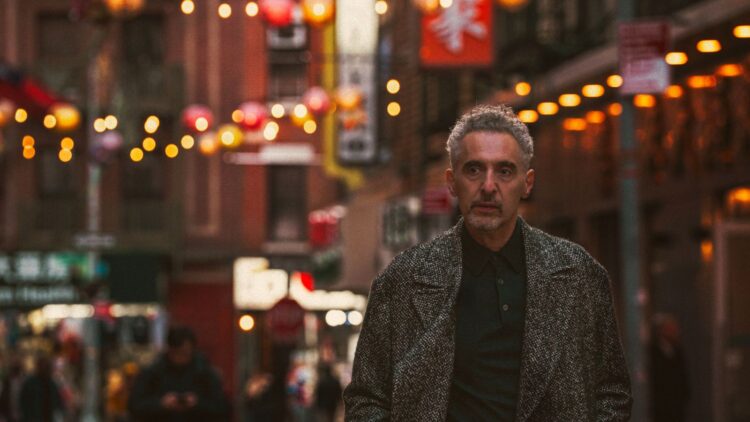

The thing about New York City is: it’s never as good as it was, yet it’s still better than anywhere else. The only thing constant is change, and the city is a paragon of that fact. There’s a dwindling number of remnants from the times when it was novel, dangerous, and vibrant. One of those relics is pickpocket Harry Lehman (John Turturro) in writer-director Noah Segan’s The Only Living Pickpocket in New York.
Segan’s fizzy trip around the five boroughs is an elegiac punctuation to the gritty crime dramas of a city that’s kept the crime but scrubbed off the grit. Segan endeavors to reconcile the changing times for an aging pickpocket with a heart of gold whose place in the city has gone the way of the payphone. It’s The Wild Bunch meets Gloria in an engrossing tale of coming to terms with the imbalance of the good and bad of a life, and if that even matters in the end.
Now in his seventies, Harry pounds the streets in a compulsive search for pocket plunder. Like the vintage Rolex on his wrist, he’s classy, a bit worn, and precise—an analog man in a digital era. It’s not that he’s a dying breed, but that he’s an obsolete model unable to receive updates. His successors have moved from the streets to the Internet, exemplified by his younger partner-in-crime Evie (Victoria Moroles). After Harry’s light and nimble fingers relieve his unsuspecting victims of their possessions, he brings those modest bounties to his longtime friend and fence Benny (Steve Buscemi). He then takes those funds back to his modest Bronx apartment, where he cares for his disabled wife, Rosie. He reads, sings, and dances for the bed-ridden Rosie, speaking to her as a spirited, devoted husband despite her inability to respond.
One night, Harry gets more than he bargained for when he lifts a gym bag belonging to Dylan Diamond (Will Price), the spoiled scion of a powerful crime family. Benny tells him the watch he’s lifted is a Rolls-Royce item, but the two septuagenarians can’t make heads or tails of a curious USB stick found in Dylan’s wallet. The device turns out to be a crypto wallet which the oblivious Harry unloads in Chinatown with the rest of his lot as Dylan and his goon squad are already hot on his trail. They make their way to Harry’s apartment where they hold Rosie hostage in exchange for the crypto wallet. Harry then sets out on a desperate tour of the five boroughs and through the friction of the past bumping up against the present.
The changing times underscore Harry’s journey with technology at the forefront. A vape store that acts as a front for iPhone laundering contrasts with Benny’s old-school pawn shop. The fake watches Harry plucks, as nice as they may be, are worthless because, as Benny says, “everything’s got a clock on it.” At home, Harry escapes the troubles of consumer electronics as he joyfully dances to his vinyl of Odyssey’s “Native New Yorker” and brushes his shoes on the kind of shine box so prevalent on the city’s streets decades ago. Like many Boomers, his tech savvy stopped somewhere in the Clinton administration. He struggles with smartphones, but when Harry borrows one from a young man to make a call, the young man is in disbelief that he knows the number by heart. The film’s villain, Dylan, is an amalgam of modern technology’s less savory aspects. The millennial traffics in cryptocurrency and gloats about the “value added” features of his tacky Apple watch over his analog timepiece.
Segan peppers in moments of nostalgia between Harry, Benny, and friendly detective Allan (Giancarlo Esposito). They share the classic New York mindset where Manhattan is simply referred to as “the city” and the place you work your way up to from the outer boroughs—a sentiment less pervasive in the era of remote work and the corporatization of Brooklyn and Queens. The city’s housing affordability issues are also addressed when Esposito’s detective talks about his family relocating to Staten Island. They speak romantically about the old days, but it also feels like a eulogy. There are few better personalities to deliver that eulogy than Turturro, Esposito, and Buscemi, three actors synonymous with a pre-Giuliani New York.
Segan is a fourth-generation New Yorker; it’s easy to tell in his view of the city. Harry’s relationship with his neighbor is friendly but cautious. She looks after Rosie when he asks, but only interacts with her through a cracked door. Rather than eating at the touristy Veselka in the East Village, Segan pops Harry on a stool across the street at the low-key B&H Dairy. But what makes The Only Living Pickpocket a truly great New York movie is his use of the outer boroughs. Harry lives in the Belmont neighborhood of the Bronx, home to the borough’s Little Italy, and makes stops in Queens, Brooklyn, and Staten Island. Segan’s second feature is yet another example of the quintessential “fifth character” city, where shooting on location automatically adds production value and imitating it cheapens the world.
Just as Harry and his buddies are sentimental for their bygone era, The Only Living Pickpocket shares their affection for the films of that time. It borrows from the crime dramas that leveraged the city so well, like Dog Day Afternoon and The French Connection. The camera voyeuristically tracks Harry as he stalks the city’s streets in his wide lapel overcoat over a funky score evoking the way Gordon Parks followed John Shaft. And like those street-level films, The Only Living Pickpocket sympathizes with Harry without forgiving him. We can love our antiheroes and yearn for those halcyon days when the city was exciting and crime was through the roof. But it ultimately hurt people, and what amount of good can make up for that?
The Only Living Pickpocket in New York premiered at the 2026 Sundance Film Festival.
The post Sundance Review: John Turturro Shines in The Only Living Pickpocket in New York first appeared on The Film Stage.
from The Film Stage https://ift.tt/CPkpYM2


0 Comments